You describe it. We design it, prove it, and make all of it.
Most clients arrive with a need and no drawing. We turn that into a concept, a design, the technical files, a sample you can hold and approve, and then the full quantity out of our own factory in Riyadh — with a complete study so you know the cost per unit, the materials and the timeline before anything is cut.
Six stages, and what you hold at the end of each
Nothing moves to the next stage until you have signed off on the one before it. That is what keeps a production run from becoming an argument.
The brief and the study
We start from what the product has to do, not what it should look like: who uses it, how many, what it has to survive, what it must cost. Then we tell you what is realistic at that quantity and that budget — including when the answer is that it is not.
You receive: A written study: materials, cost per unit at each quantity, timeline, risks
Concept
Two or three directions, not twenty. Each one is costed, so you are choosing between things you can actually buy rather than between pictures.
You receive: Costed concept directions with references and dimensions
Design
The chosen direction is taken to a finished design: proportions, materials, finishes, colours, branding and how it is assembled. Rendered in 3D so it is approved from something you have seen.
You receive: 3D views, material board, finished design
Technical files
The drawings the factory floor actually works from: cutting files, assembly drawings, tolerances, finishing and print specifications. They are yours — the design does not stay hostage to us.
You receive: Production-ready files, handed over to you
The sample
One unit, made on the same machines and in the same materials as the run. You hold it, use it, and ask for changes. Anything found here costs a sample; the same thing found after the run costs the run.
You receive: A physical sample, plus a revision round
The full run
Production of the agreed quantity, with quality checks against the approved sample, packing, and delivery to your warehouse or straight to the event.
You receive: The full quantity, packed and delivered
A product that already has drawings skips to stage 04 or 05. Say so in the brief and the proposal is written from there.
What the study tells you before anything is cut
Most manufacturing disputes come from a number nobody wrote down. The study is written first and it is what the quotation is built on.
- Cost per unit at several quantities, so you can see where the price actually breaks
- Materials specified by name and grade, with the alternative at each one and what it costs or saves
- Dimensions and tolerances, and which of them matter to how the product is used
- Finishing and print method, with what each does to durability and to lead time
- Timeline split into design, sample and production, with the dates that depend on your approval
- Packing and delivery, including what it takes to ship it and what it weighs
- Risks named plainly: what could delay it, what could raise the cost, what we would not recommend
- What is excluded, so the quotation has no silent gaps
The study is delivered as a document you keep, whether or not you go ahead with the production.
Product families we manufacture
Corporate products in wood, acrylic, metal, fabric and print. If it is cut, assembled, printed and finished, it is in scope.
Trophies and plaques
Wood, acrylic, metal and composites, engraved or printed, in boxes made to match.
Corporate gifts
Gift sets and their packaging, produced as one piece of design rather than bought separately.
Displays and stands
Retail displays, product stands and counters, built to be assembled on site.
Signage
Interior and exterior signage, directional systems and lettering.
Exhibition elements
Booth structures, walls, counters and their reusable flight cases.
Packaging and boxes
Rigid boxes, inserts and printed packaging, sized to what goes inside them.
Furniture and fixtures
Reception desks, cabinetry and fit-out joinery for offices and retail.
Print and graphics
Large-format print, vinyl, backlit and specialist finishes from our own press.
The product is made in our buildings, not sourced
This is what makes a sample take days instead of weeks, and what makes a late change a phone call rather than a new purchase order.
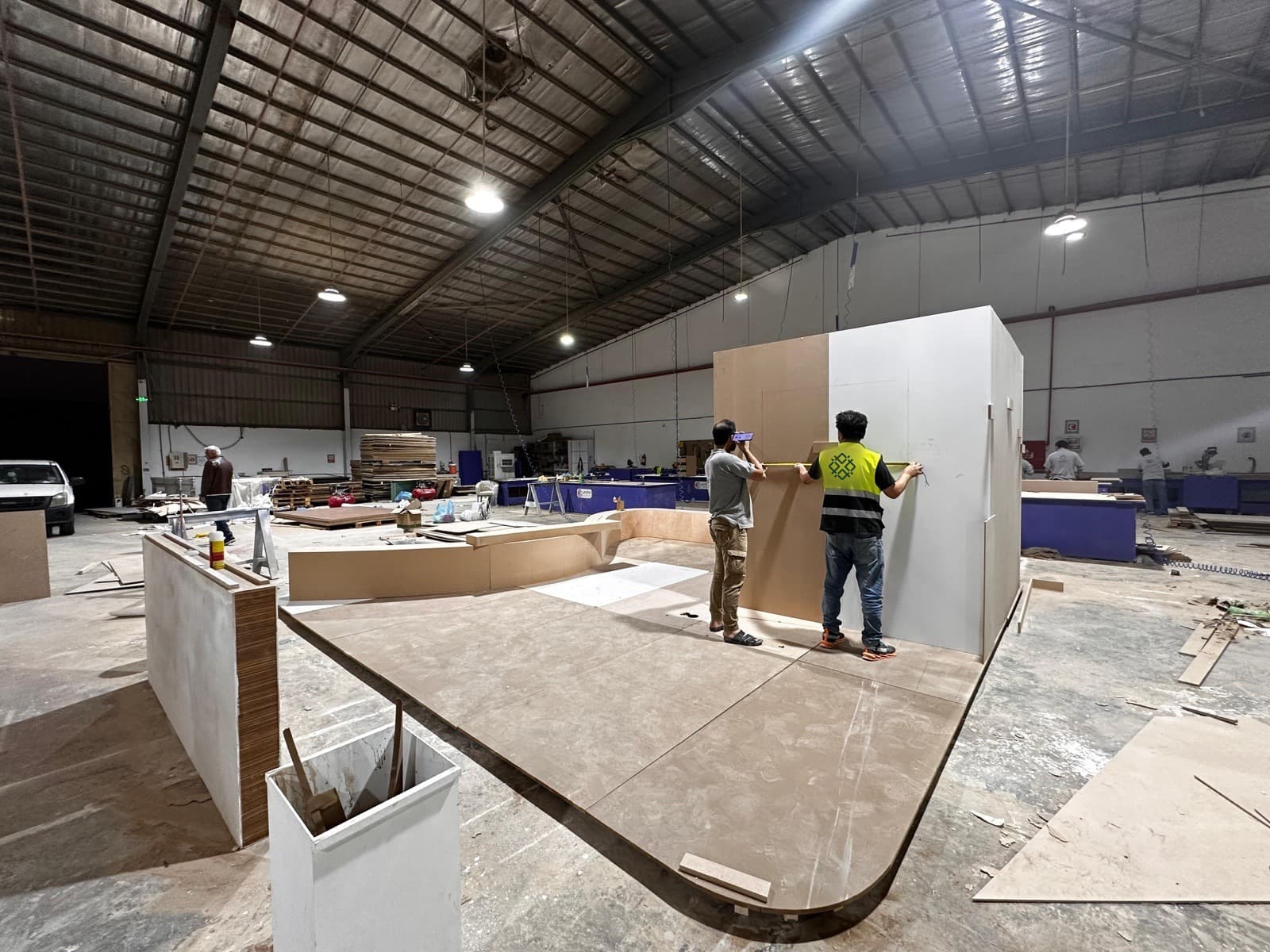
Factory and carpentry workshop
Cutting, laser, assembly and finishing in our workshop in Riyadh. The sample and the run come off the same machines, so what you approve is what you receive.
See the factory →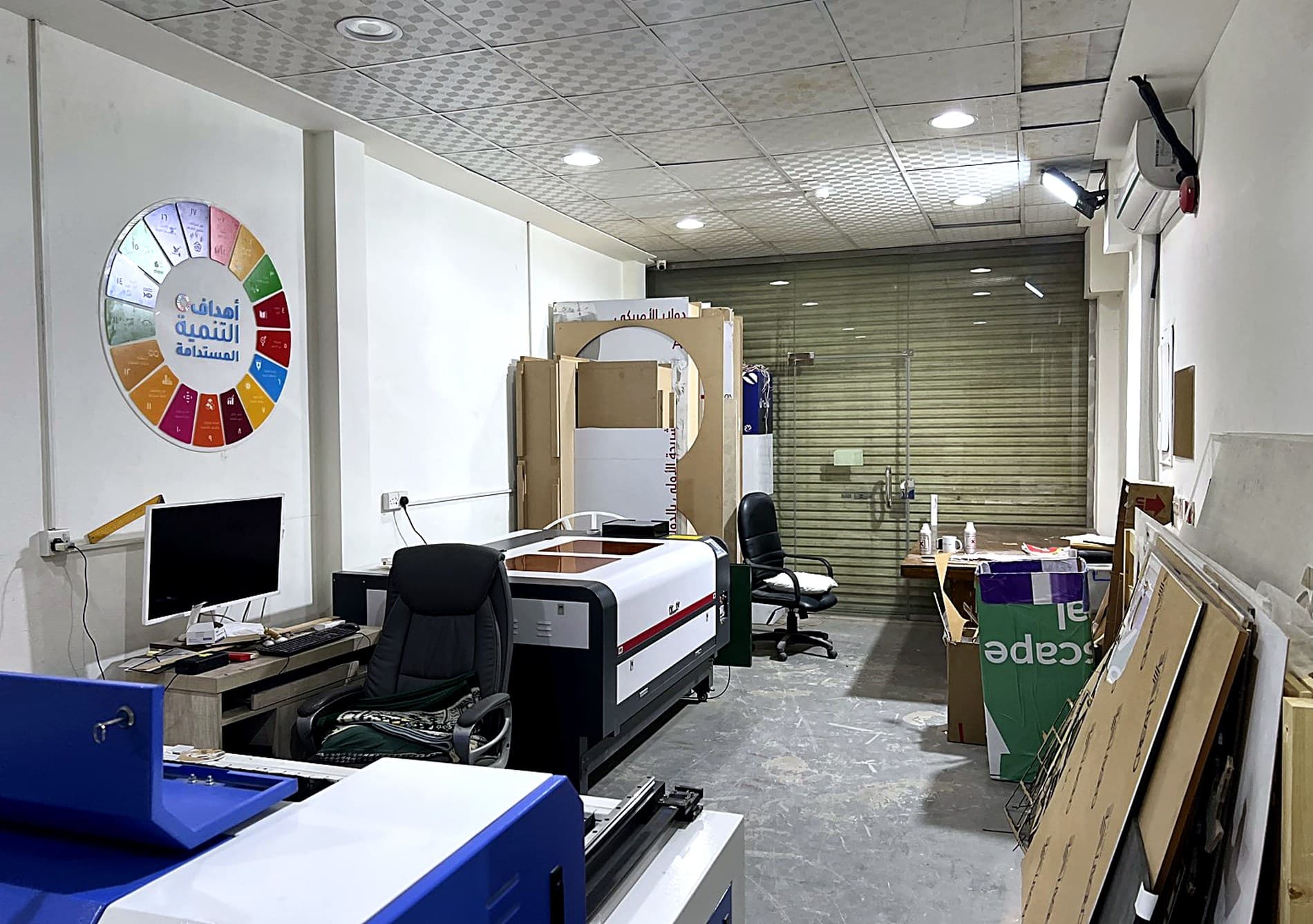
Our own print house
Large-format, flatbed and finishing in-house. Print is specified with the product rather than ordered after it, which is why colours match across a run.
Al Wasat Commercial Complex, Al Salhiyah, Riyadh
See the print house →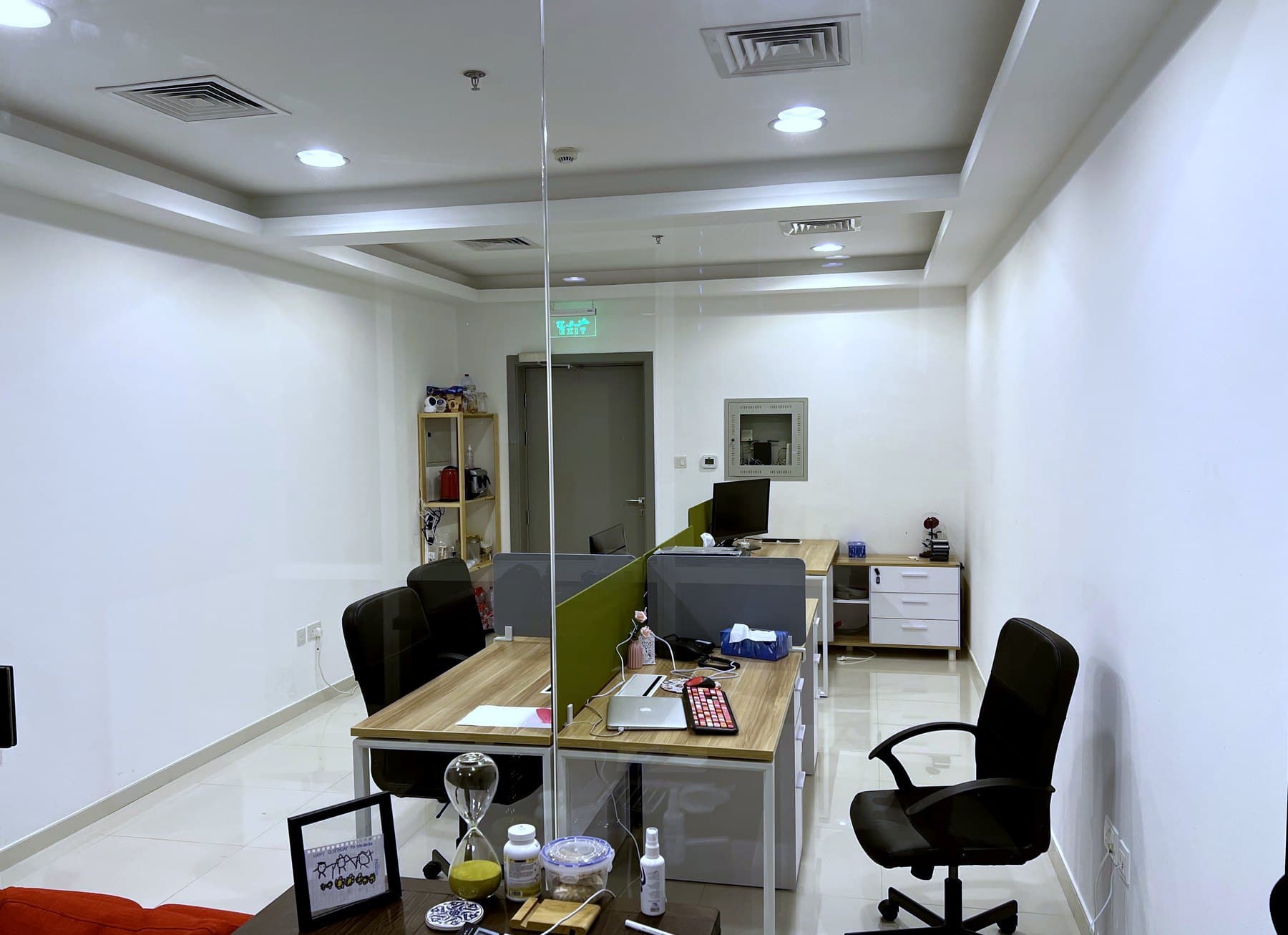
Design studio
Concept, 3D and the technical files are produced by the same team that briefs the floor, so nothing is lost between a drawing and a cut.
See the studio →One contract for the whole route
Study, design, files, sample and production sit under one agreement with one point of contact. Invoicing is from our Saudi entity and complies with the Zakat, Tax and Customs Authority requirements.
Three ways in
Where you join depends on how far the product already is.
Idea to delivery
The whole route, from the brief to the delivered quantity.
- Written study and costing at several quantities
- Concept, design and 3D views
- Technical files, handed over to you
- Sample with a revision round
- Full production, quality checks, packing and delivery
Design and files only
You manufacture elsewhere; we take it to production-ready drawings.
- Study and costing
- Concept and finished design
- Technical and cutting files
- A sample, if you want one before committing
Production from your files
The design exists. We sample it and run the quantity.
- File review and a manufacturability note
- Sample against your drawings
- Full production run
- Packing and delivery
Pricing is built per unit from the quantity, the materials and the finishing. Send the idea — a sketch, a photograph or a paragraph is enough — and a written study and quotation follow.
Adjacent work
Other parts of the same production line.
Frequently asked
I only have an idea, not a drawing. Is that enough to start?
Yes, and it is how most of this work starts. A sketch on paper, a photograph of something similar, or a paragraph describing what the product has to do is enough for the first conversation. The study turns it into materials, quantities and a cost, and the design follows from there.
Who owns the design and the files?
You do. The technical files are handed over at the end of the file stage, and the design is yours to manufacture elsewhere if you choose to. We do not hold a design hostage to a production order.
What is the minimum quantity?
There is no fixed minimum, but the cost per unit moves sharply at low volumes because the setup is the same whether you make 20 or 2,000. The study shows you the cost at several quantities so you can see where the break is before you commit.
How long does a sample take?
Usually one to two weeks after the design is approved, depending on the materials and the finishing. It is made on the machines that will produce the run, which is the point — a sample made another way proves nothing about the run.
What if the sample is wrong?
One revision round is included, and that is what the sample stage is for. Finding a problem at the sample costs a sample. Finding the same problem after the run costs the run, which is why we do not skip this stage even when the schedule is tight.
Can you produce something designed by someone else?
Yes. Send the files and we review them for manufacturability first — this is where most imported designs need a change, usually in tolerances or in a material that is not practical to source here. You get that note before anything is quoted.
Do you deliver outside Riyadh?
Yes, across the Kingdom, and the delivery line sits separately in the quotation so you can see it. Delivery can be to your warehouse, to several branches, or straight to an event on the day.
Can you work against a purchase order?
Yes. Invoicing is from our Saudi entity and complies with the Zakat, Tax and Customs Authority requirements, and we work against a purchase order or an annual framework agreement.
Send the idea. Even a sketch is enough.
Describe what the product has to do, roughly how many you need and when. A written study and a quotation follow, and if we think it is the wrong product for the job we will say so before you spend anything.